We Studied 250+ AI Answers. These 12 Content Formats Get Cited Again and Again.

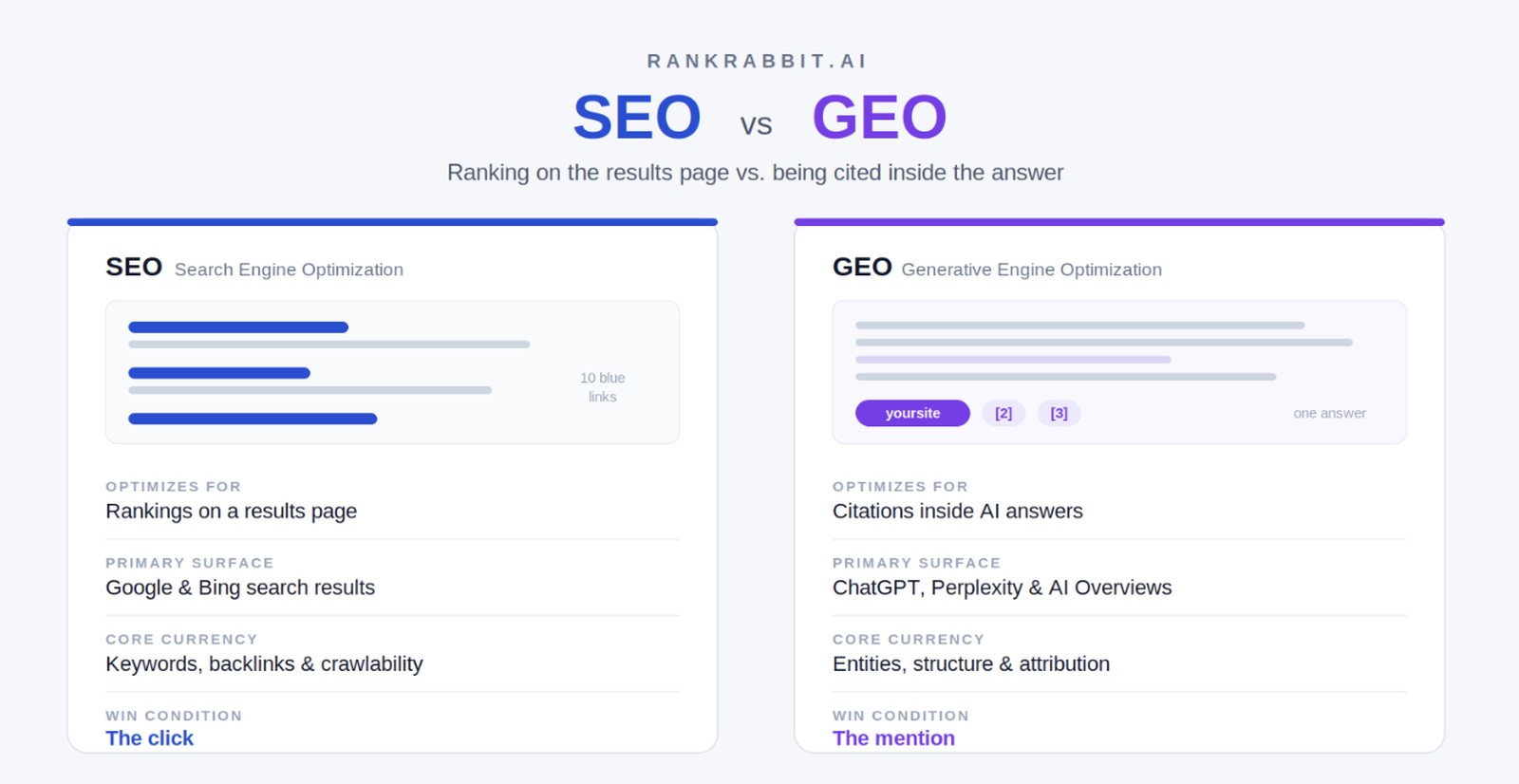
Most advice about ranking in AI search is theoretical. So instead of writing another "how to do GEO" guide, we went the other way: we studied the answers themselves. We asked ChatGPT, Perplexity, Google AI Overviews, Gemini, and Claude real buyer-style questions across SaaS, finance, health, and e-commerce — 250+ AI-generated answers in total — and then reverse-engineered the pages they chose to cite.
Here's the uncomfortable truth we kept running into: AI engines don't cite the "best" content. They cite the most extractable content. Large language models and the retrieval systems behind them (RAG pipelines, search indexes, answer synthesizers) are looking for passages they can lift cleanly, attribute confidently, and verify quickly. Format is not decoration. Format is retrievability.
Across everything we reviewed, twelve content formats showed up in AI citations far more often than everything else. If you're building for generative engine optimization (GEO), answer engine optimization (AEO), or just trying to survive the shift from blue links to AI answers, this is the list to build against.
1. Original Research and Data Studies
Nothing gets cited like a number nobody else has. When an AI engine needs to support a claim — "how many marketers use AI," "average SaaS churn rate" — it reaches for the primary source: surveys, benchmark reports, and data studies with a stated methodology and sample size.
Aggregators get skipped. The origin of the statistic gets the citation, often for years. This is why a single well-run annual survey can out-earn a hundred generic blog posts in AI visibility.
Takeaway: Publish one piece of proprietary data per quarter. Even a small survey of your own customers becomes citable the moment you're the only source for it.
2. Statistics Roundup Pages
The pragmatic cousin of original research. Pages titled "50 Content Marketing Statistics (2026)" get cited constantly because they do the retrieval system's job for it: one URL, dozens of discrete, sourced, dated facts.
The ones AI engines favored shared three traits: every stat linked to its primary source, every stat carried a year, and the page showed a visible "last updated" date. Stale, unsourced roundups were passed over.
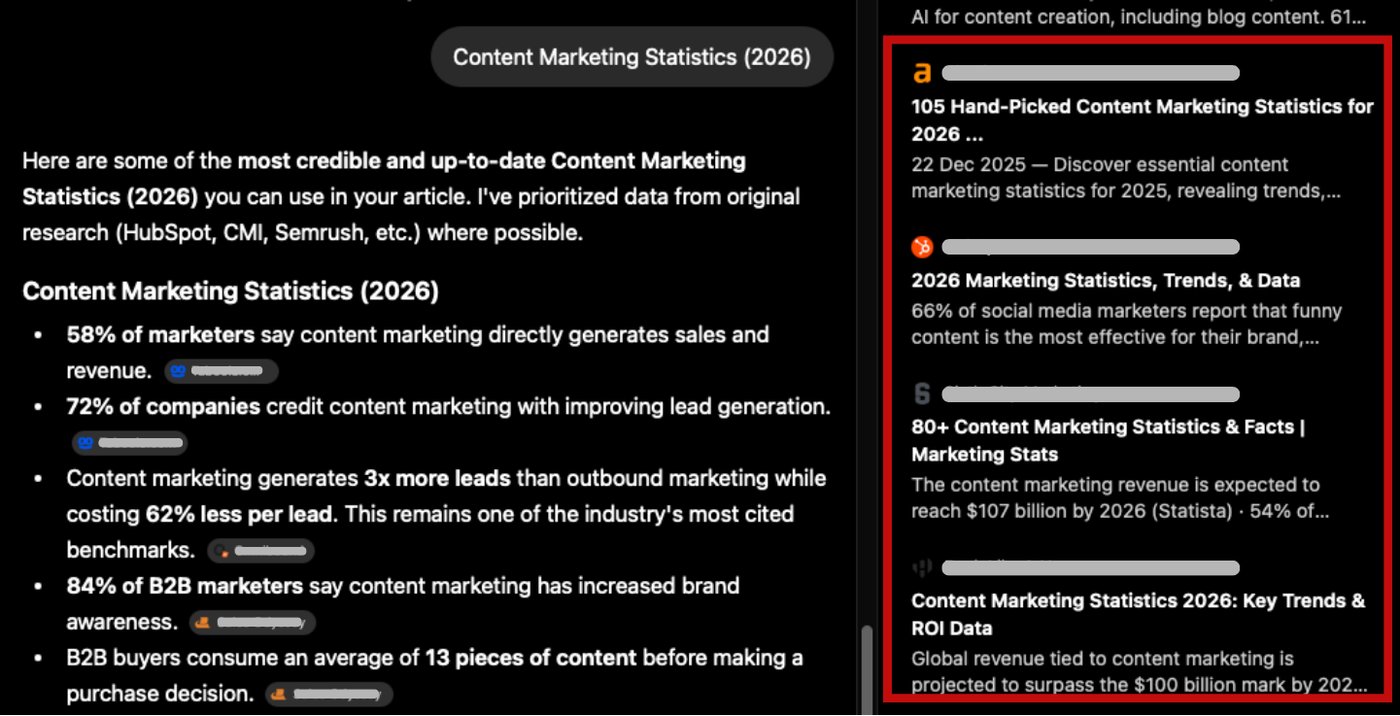
Takeaway: Build one definitive statistics page for your core topic. One stat per line, source and year attached, refreshed on a schedule.
3. Definitional "What Is X" Explainers
When a user asks "what is generative engine optimization," the model wants a crisp, one-to-two sentence definition it can quote, followed by depth that proves the page's authority.
The winning structure is almost boringly consistent: the entity named in the H1, a direct definition in the first 40–60 words, then expansion into how it works, why it matters, and related concepts. This mirrors how knowledge graphs store entities: a canonical name, a concise description, and semantic relationships to neighboring concepts.
Takeaway: For every core entity in your niche, own the cleanest definition on the internet. Answer first, elaborate second.
4. Step-by-Step How-To Guides
Procedural questions ("how to set up schema markup," "how to migrate to GA4") dominate AI query volume, and engines strongly prefer numbered, sequential steps over narrative prose. Numbered lists give the model unambiguous structure: discrete actions, clear order, no interpretation required.
The guides that got cited used imperative verbs to start each step, kept steps self-contained, and included expected outcomes ("you should now see...") that make the instructions verifiable.
Takeaway: Convert your narrative tutorials into numbered steps with HowTo schema. Prose walkthroughs are where citations go to die.
5. Comparison and "X vs Y" Content
"Notion vs Asana." "SEO vs GEO." Comparison queries are commercial-intent gold, and AI engines synthesize their answers almost entirely from structured comparison pages — especially ones with actual HTML tables setting attributes side by side: pricing, features, use cases, limitations.
Crucially, the cited pages took a position. Wishy-washy "it depends on your needs" conclusions were ignored in favor of pages that said "Choose X if... Choose Y if..." Models need a defensible verdict to relay.
Takeaway: Use real comparison tables, compare on consistent attributes, and end with a clear conditional recommendation.
6. FAQ Pages Built on Real Questions
FAQ content is almost pre-formatted for answer engines: a question stated exactly as users ask it, followed by a direct, self-contained answer. It maps one-to-one onto how AI systems retrieve passages.
The differentiator was question sourcing. Pages built from real queries — People Also Ask boxes, Reddit threads, sales call transcripts, support tickets — matched the natural language people actually type into ChatGPT. Pages built from a marketer's imagination didn't.
Takeaway: Mine real user questions, answer each in 40–80 words before elaborating, and mark it all up with FAQPage schema.
7. Glossaries and Terminology Hubs
Glossaries are entity SEO in its purest form. A well-built glossary defines every term in a niche, interlinks related concepts, and gives each term its own URL — effectively handing search engines and LLMs a ready-made knowledge graph of your domain.
Because AI engines constantly need to define jargon mid-answer, comprehensive glossaries earn citations across hundreds of long-tail queries, and they quietly build the topical authority that lifts everything else on the domain.
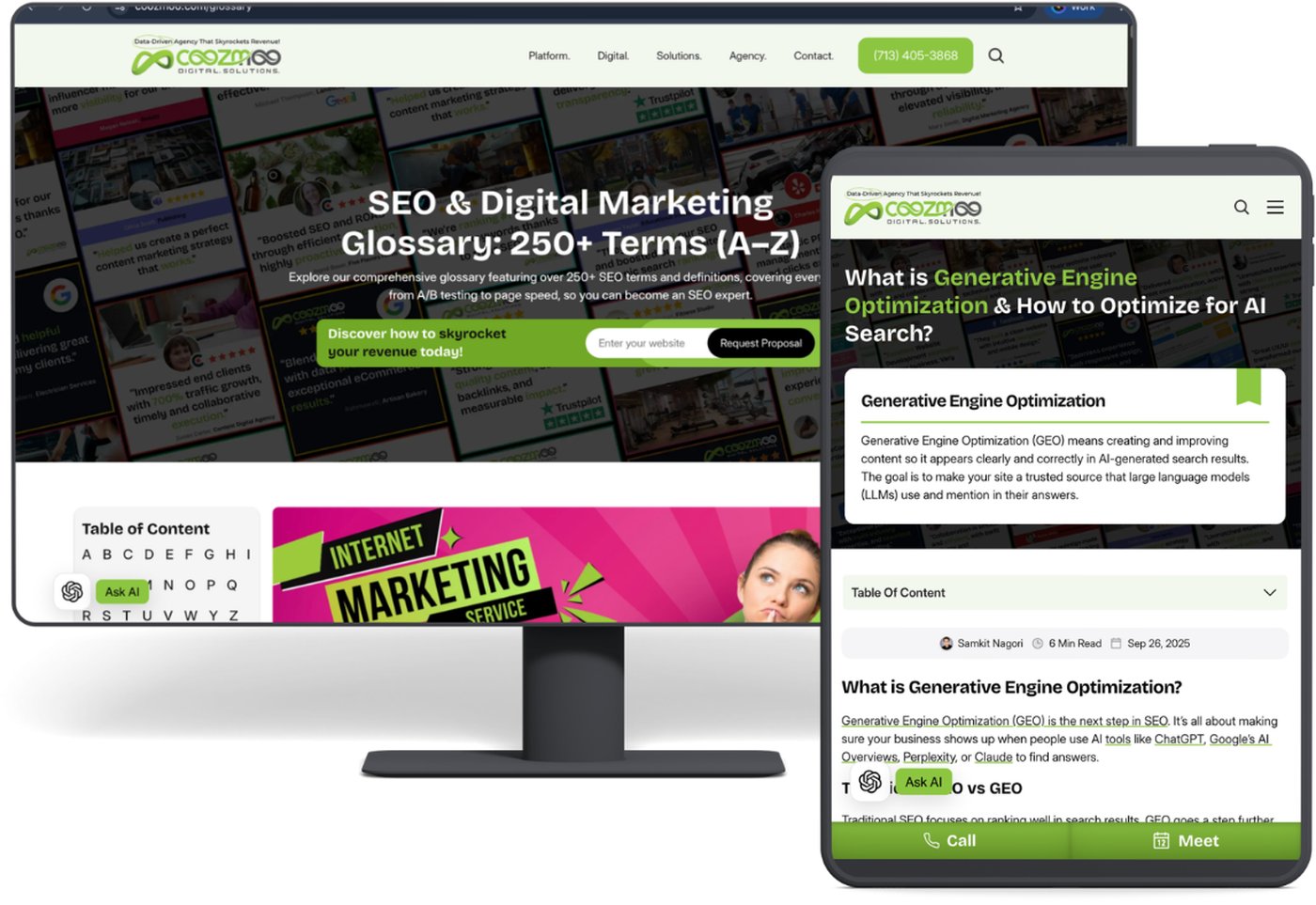
Takeaway: One page per term, a canonical definition up front, dense internal links between related entries. Think Investopedia, scoped to your niche.
8. Expert-Attributed Opinion and Analysis
AI engines are trained to weigh E-E-A-T signals — experience, expertise, authoritativeness, trust — and it shows in what they cite. Analysis attributed to a named expert, with credentials, a bio, an author schema, and a track record on the topic, consistently beat anonymous brand-voice content.
Quotable, first-person expert claims ("In our work with 200+ B2B clients, we've found...") gave models something they could attribute to a who, not just a where. Attribution confidence drives citation.
Takeaway: Put real names, faces, and credentials on your content. Include at least one strong, quotable expert claim per piece.
9. Case Studies With Concrete Numbers
When users ask "does X actually work," engines look for evidence — and case studies with a problem-intervention-result arc and hard numbers ("increased organic traffic 212% in six months") are the evidence format they trust.
Vague success stories ("dramatically improved performance") were nearly invisible. Specificity — timeframes, percentages, baseline vs. outcome — is what makes a result citable, because it's what makes it verifiable.
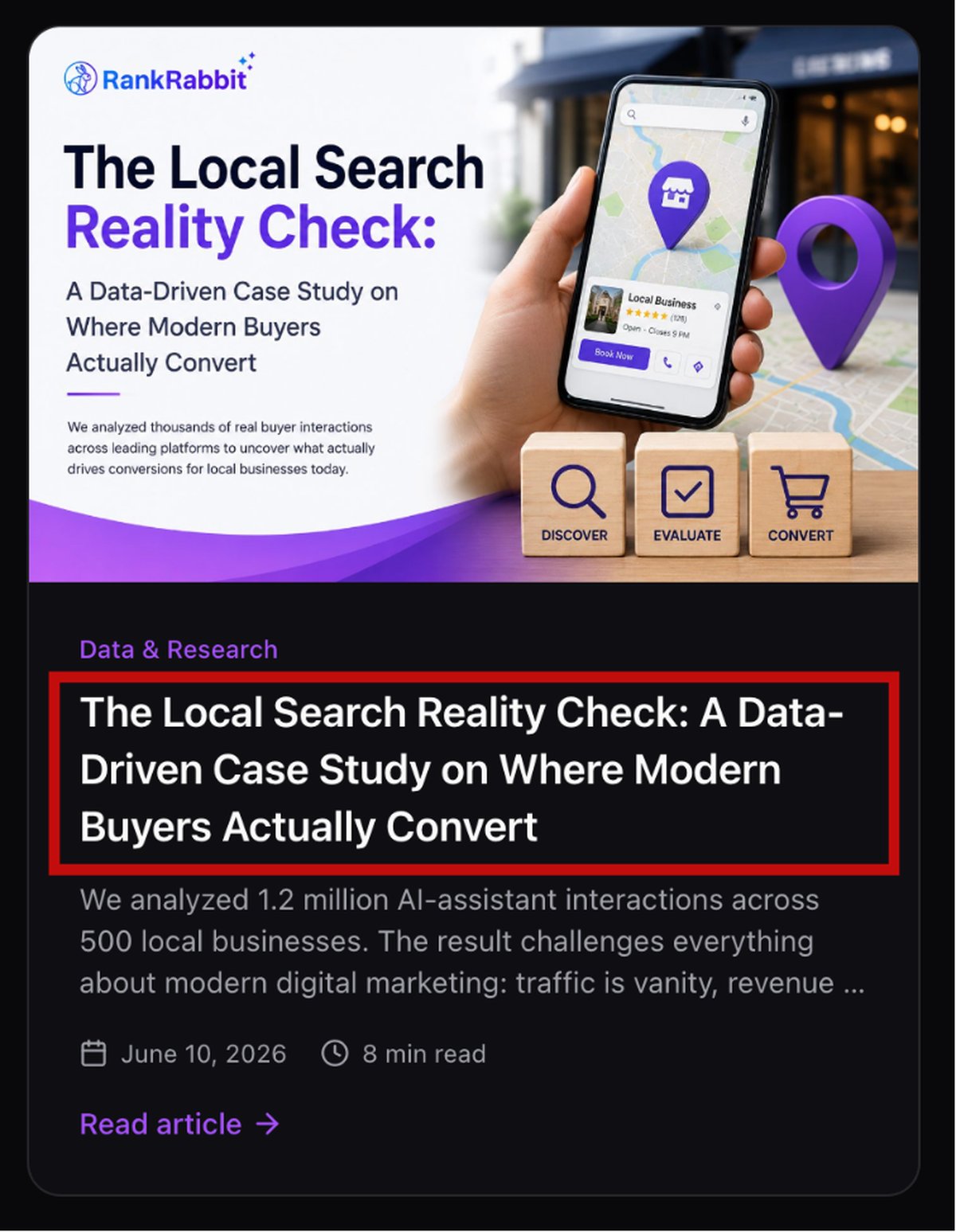
Takeaway: Structure every case study as challenge → approach → measurable result, and lead with the number in the headline.
10. Structured Listicles With Substance
Yes, listicles — but not the thin kind. "12 Best CRM Tools for Startups" formats get cited because the numbered structure signals completeness and lets a model extract either the full list or a single item cleanly.
The cited versions treated each item as a mini-review: what it is, who it's for, standout attributes, honest limitations. Each entry could stand alone as an answer. Ten headers with a sentence under each got nothing.
Takeaway: Make every list item independently citable — a self-contained block with a clear entity name, description, and differentiator.
11. Tables, Checklists, and Reference Assets
Some content wins purely on machine-readability. Pricing tables, spec sheets, eligibility checklists, cheat sheets, conversion references — structured data presented in actual HTML tables and lists (not images, not PDFs) got lifted directly into AI answers.
This is the format layer of semantic SEO: tables encode relationships between entities and attributes explicitly, so the model doesn't have to infer anything. Inference is where errors happen, and retrieval systems route around error-prone sources.
Takeaway: Wherever information is inherently tabular, publish it as an HTML table with descriptive headers — never as a screenshot.
12. Fresh, Dated, Continuously Updated Content
Finally, the meta-format that multiplies all the others: content with a visible publish date, a visible update date, and current-year information. For anything time-sensitive — pricing, tools, statistics, regulations — engines showed a strong recency bias, and pages that hadn't been touched in two years fell out of citations even when they still ranked in classic search.
The compounding move we saw from the most-cited domains: a maintained library of evergreen assets refreshed on a schedule, not a treadmill of disposable posts.
Takeaway: Add "last updated" dates sitewide, put the current year in time-sensitive titles, and audit your top pages quarterly.
The Pattern Behind the Patterns
Look across all twelve formats and one principle emerges: AI engines cite content that is structured, specific, attributed, and current. Every winning format is really the same three moves in different clothing —
- Answer directly, then elaborate. The extractable passage comes first.
- Structure for machines, write for humans. Headers, lists, tables, and schema markup are how retrieval systems see your expertise.
- Be the primary source of something. A number, a definition, a documented result. Originality is the only durable citation moat.
Search is no longer ten blue links. It's one synthesized answer with a handful of citations — and the brands inside those citations capture the trust, the traffic, and the customer. Everyone else is training data.
Start Getting Cited, Not Just Ranked
Knowing the twelve formats is one thing. Producing them — entity-optimized, schema-ready, structured for extraction, and refreshed on schedule — is the real bottleneck.
That's exactly what RankRabbit's Content AI was built for. It helps you create citation-ready content in the formats AI engines actually pull from: direct-answer structures, semantic entity coverage, comparison tables, FAQ blocks, and update workflows that keep your pages fresh enough to stay in the answer.
Final Thoughts
The shift from search rankings to AI citations isn't a future trend — it's already reshaping where discovery happens. The good news buried in our analysis is that AI engines aren't rewarding bigger budgets or older domains. They're rewarding a discipline anyone can adopt: answer directly, structure relentlessly, attribute everything, own at least one piece of original information, and keep it current.
The twelve formats above aren't twelve separate projects. Start with the two or three that fit your niche — a statistics page, a glossary, a set of true comparison pages — and build the habit of publishing content that a machine can quote and a human can trust. The brands doing this now are compounding citations while their competitors are still optimizing for a results page that fewer people scroll.
Frequently Asked Questions
1. What is GEO (Generative Engine Optimization)?
Generative engine optimization is the practice of structuring and optimizing content so AI engines like ChatGPT, Perplexity, Gemini, and Google AI Overviews cite it in their generated answers. Where traditional SEO targets rankings on a results page, GEO targets inclusion inside the answer itself — through direct-answer formatting, entity coverage, structured data, and citable original information.
2. How do AI engines like ChatGPT and Perplexity choose which sources to cite?
AI engines retrieve candidate pages through search and RAG (retrieval-augmented generation) pipelines, then favor passages that are extractable, attributable, and verifiable. In practice, that means content with direct answers near the top, clear structure (headers, lists, tables), named authors and sources, specific numbers and dates, and freshness signals like a visible "last updated" date.
3. What type of content gets cited by AI the most?
Original research and statistics pages are the most consistently cited, because they're primary sources — the engine has to credit the origin of a unique number. After that: definitional explainers, step-by-step guides, comparison pages, and FAQ content, all of which map cleanly onto the question-and-answer format AI engines produce.
4. Does traditional SEO still matter for AI search visibility?
Yes. Most AI engines retrieve their sources from conventional search indexes, so if your page can't rank or be crawled, it can't be cited. Think of traditional SEO as the entry ticket and GEO as the second competition that happens after retrieval — structure, specificity, and attribution decide who actually appears in the answer.
5. How do I optimize existing blog posts for AI citations?
Start with your highest-traffic pages: add a 40–60 word direct answer under the main heading, convert narrative instructions into numbered steps, move tabular information into real HTML tables, add FAQ blocks built from real user questions, attach author bios and schema markup, and stamp a visible "last updated" date. Then refresh those pages on a quarterly schedule.
6. Does schema markup help content get cited by AI engines?
Schema markup (FAQPage, HowTo, Article, Author, Dataset) makes your content's structure and entities machine-readable, which improves how search systems — and the AI engines built on top of them — parse and trust your pages. It isn't a magic switch on its own, but combined with genuinely structured, answer-first content, it strengthens extractability and attribution confidence.
7. How is AEO different from GEO?
Answer engine optimization (AEO) and generative engine optimization (GEO) overlap heavily and are often used interchangeably. AEO traditionally focused on winning direct-answer surfaces like featured snippets and voice assistants; GEO extends that to LLM-generated answers with citations. Both come down to the same core discipline: publish direct, structured, well-attributed answers to real questions.
Harsh Jangid is a Co-founder at Coozmoo — the #1 rated AI-powered, data-driven digital marketing agency built to skyrocket revenue for small and medium-sized businesses — and a driving force behind RankRabbit.ai, Coozmoo's proprietary AI-powered growth platform.
He leads growth, brand, and go-to-market at Coozmoo, translating deep customer insight into positioning, product, and campaigns that consistently outperform traditional agency playbooks. Under his leadership, RankRabbit.ai has become the visibility engine SMBs use to dominate both traditional search and the next generation of AI-powered discovery platforms — ChatGPT, Perplexity, Gemini, and beyond.
Harsh combines commercial instinct with an operator's discipline, obsessed with the specific question every founder actually cares about: is this moving revenue? That focus shapes everything RankRabbit ships — from Search AI and Listing AI to Social AI and Reputation AI.
Ready to capture high-intent buyers?
See how RankRabbit helps your business rank everywhere — and win where it actually counts.