42% of AI Overview Citations Pull From The Top 10: What 2.2 Million Citations Told Us
If you've been chasing the top 10 as your north star for AI visibility, it's time to rethink the map.
We analyzed 2.2 million AI Overview citations to answer a simple but increasingly urgent question: how much does your position in Google's regular search results actually matter for getting cited in AI Overviews?
The answer: less than most SEOs assume.
Just 41.2% of pages cited in AI Overviews were also ranking in the top 10 organic results for the same query. The rest were split between mid-tier rankings and pages that didn't rank in the top 100 at all, some of which weren't ranking on Google's regular SERP whatsoever.
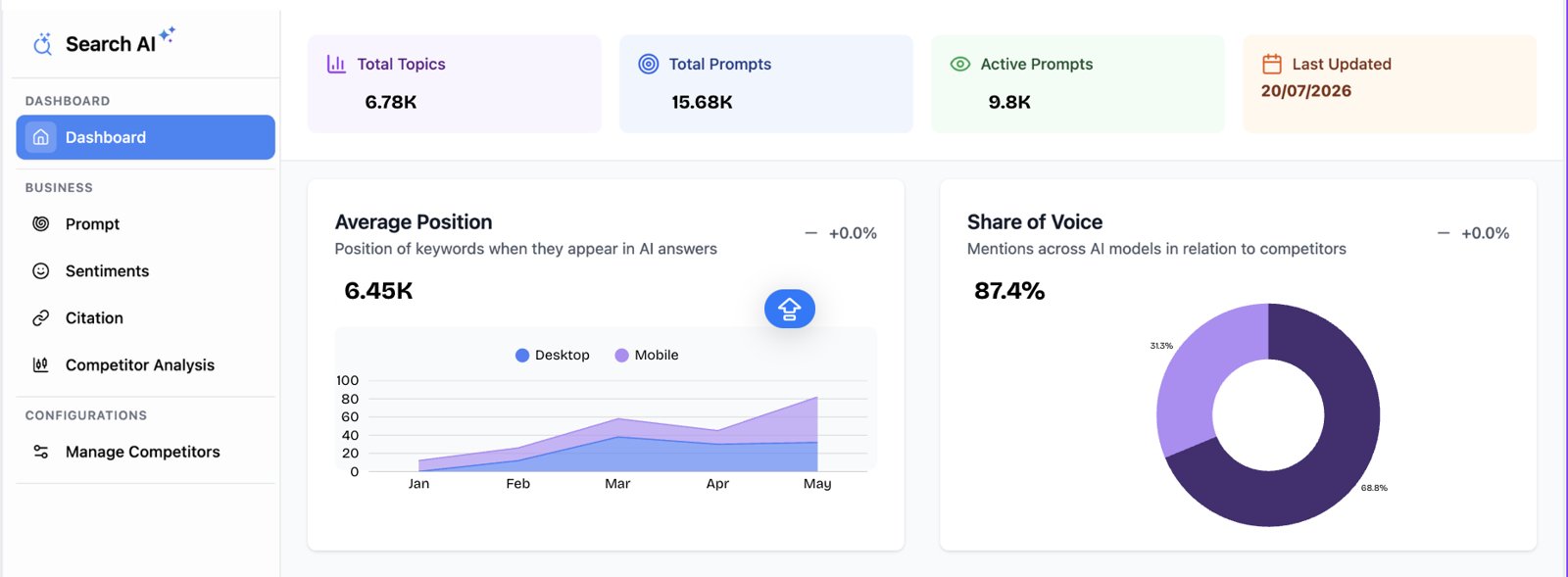
All of this data was taken from RankRabbit AI, our AI visibility tool.
Here's what we found, and what it means for how you build content going forward.
Where cited pages actually rank
We pulled citations across a broad spread of queries and cross-referenced every cited URL against its corresponding organic ranking position for the same keyword. The distribution looked like this:
| Organic position | % of cited URLs |
|---|---|
| Rank in top 10 | 41.2% |
| Rank 11–100 | 26.3% |
| Don't rank in top 100 | 32.5% |
In other words, nearly 6 in 10 AI Overview citations come from pages that aren't in the traditional top 10. A third of all citations go to pages that don't even crack the top 100, meaning Google's AI layer is reaching well beyond what a searcher would ever scroll to organically.
This is a meaningful shift in how visibility works. Ranking well used to be the whole game. Now it's one input among several, and for nearly a third of citations, it isn't an input at all.
Why is this happening? Query fan-out is the likely driver
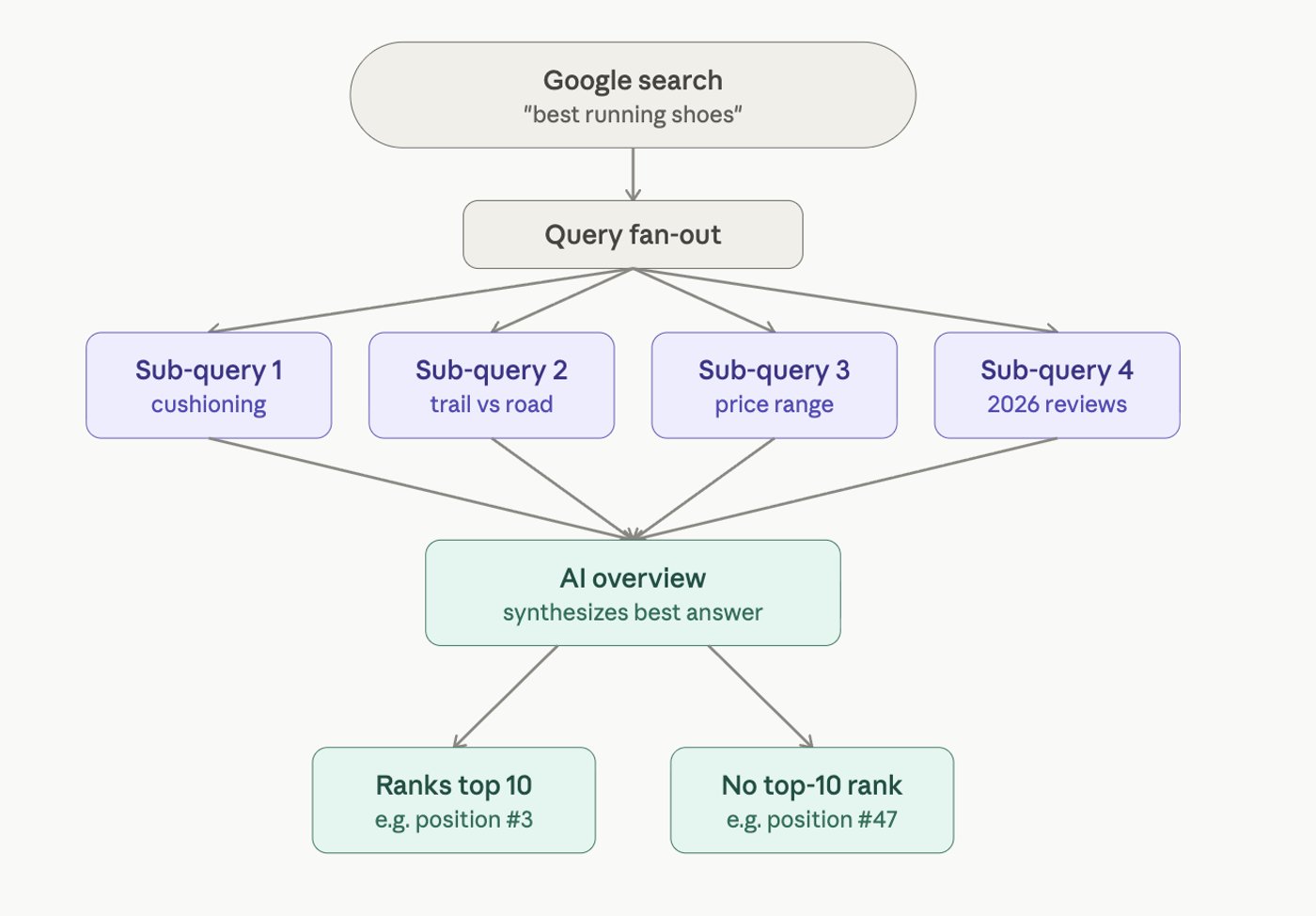
The mechanism behind this is something Google has openly described: query fan-out. When a search triggers an AI Overview, Google doesn't just answer the literal query typed into the box — it silently generates a cluster of related sub-queries behind the scenes, retrieves results for each of them, and synthesizes an answer from whichever pages perform best across that expanded set.
That means a page can lose on the exact head term you're targeting and still win a citation, because it ranks well for one of the dozen or so fan-out variations Google generated behind the query. Conversely, a page can rank #1 for the literal query and still get skipped if it doesn't address the broader intent cluster the AI is actually trying to satisfy.
This reframes the optimization target entirely. You're no longer optimizing a single page for a single keyword's SERP. You're optimizing a topic for an entire constellation of related questions a user might implicitly be asking.
20% of non-ranking citations come from YouTube
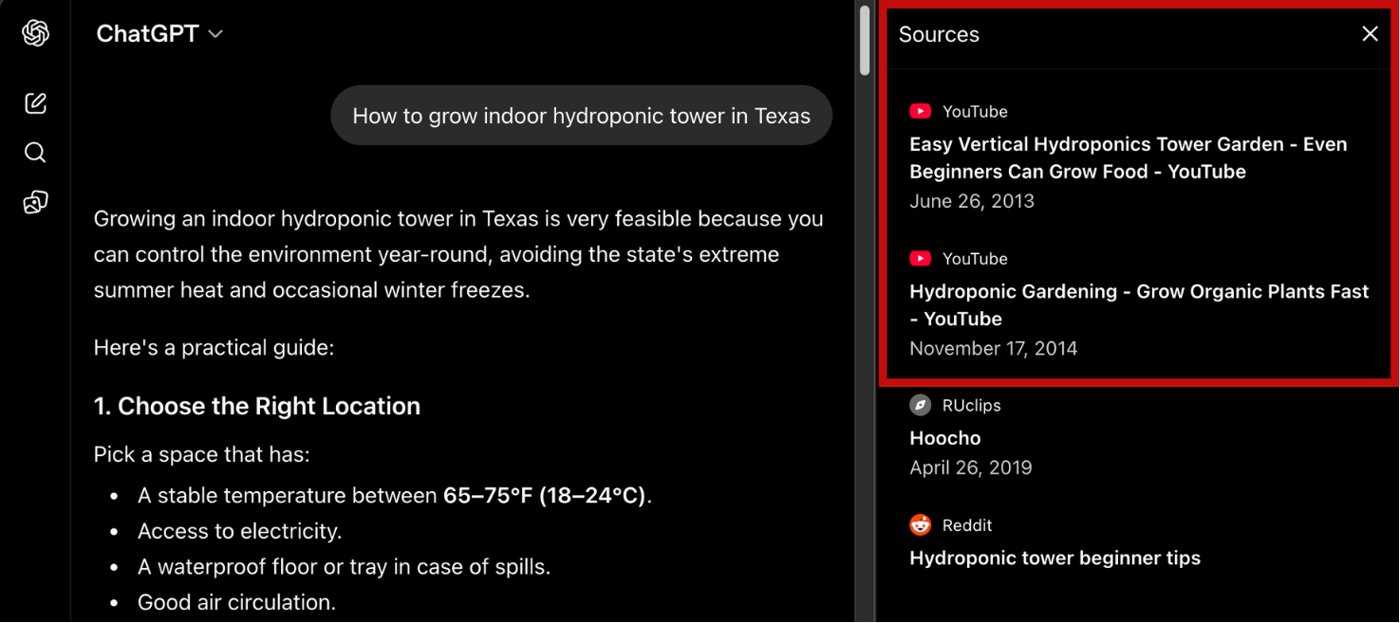
One of the more striking patterns in the dataset: among citations pulled from pages that didn't rank in the top 100 for the query, 20% were YouTube URLs.
That's a significant chunk of "invisible" citations — pages that would never surface if you were only watching your organic rank tracker — coming from a single platform. It suggests that video content, particularly transcripts and structured descriptions, carries real weight in how AI systems assemble answers, independent of whether that video ranks anywhere in the traditional blue-link results.
For content and SEO teams still treating YouTube as a distribution channel rather than a discovery surface, this is a signal worth taking seriously. A well-structured video with a clear, information-dense transcript may be doing more for your AI visibility than a page sitting on page one of Google.
What this means for your content strategy
The data points to a few concrete shifts worth making:
- Stop optimizing for a single keyword's SERP. Build content that comprehensively answers the cluster of questions around a topic, not just the literal query. Look at "People Also Ask," related searches, and forum discussions (Reddit, Quora) to map the fan-out questions a user is likely to have.
- Don't ignore pages outside your top 10. If you have content ranking in positions 15–60 that's topically strong but not winning head-term visibility, it may already be earning AI citations you're not tracking. Audit AI Overview appearances separately from your rank tracker — they are not the same dataset.
- Treat YouTube as an AI visibility channel, not just a video platform. Structure video descriptions and rely on clear, well-paced spoken content that transcribes cleanly. Transcripts are frequently what AI systems are actually parsing.
- Build for passages, not just pages. Because citations increasingly come from content that doesn't rank for the primary query, the unit AI systems are evaluating is closer to a passage or section than a whole page's authority. Make sure individual sections of your content can stand alone as clear, complete answers.
- Re-run this analysis on your own citations regularly. AI Overviews are probabilistic, the same query can return different citations across sessions, and Google's underlying models are updated frequently enough that citation patterns shift over time. Treat this as a moving target, not a one-time audit.
How to get cited in AI Overviews
If ranking in the top 10 is no longer a reliable path to citation, what actually works? Based on what we're seeing across the dataset, a handful of practical levers stand out.
Map the fan-out, not just the keyword
Since Google is retrieving across a cluster of related sub-queries rather than just the one typed into the search box, your job is to anticipate that cluster before you write. Before drafting, list out every adjacent question a searcher with this intent might also have — definitions, comparisons, edge cases, "how much does it cost," "is it safe," "vs alternative X." Tools like People Also Ask, AlsoAsked, and even ChatGPT or Gemini themselves (ask them to generate related questions for your target query) are useful proxies for simulating what Google's fan-out might look like, even though Google doesn't expose its actual expanded queries.
The goal isn't to guess the exact sub-queries Google generates — that's a moving target and changes run to run. It's to make sure your content is dense enough in relevant subtopics that it has a high chance of matching several of them, whatever they turn out to be.
Write in extractable, self-contained passages
AI Overviews tend to pull tight, well-scoped passages rather than crediting an entire page's general authority. Structure your content so that individual sections, not just the page as a whole, can stand alone as a complete answer to a specific question. That means:
- Clear, descriptive subheadings that mirror how people actually phrase questions
- A direct answer within the first sentence or two of a section, before the supporting detail
- Concrete numbers, definitions, and steps rather than vague framing
A page that "eventually gets to the point" over several paragraphs is harder to extract cleanly than one where each section answers its own question up front.
Don't neglect content that isn't ranking top 10
Since a large share of citations come from pages ranking outside the top 10, or not ranking at all, it's worth revisiting content you may have written off as underperforming. If a page is topically strong but stuck in position 20–50, improving its depth and clarity may earn it an AI citation even without a jump in traditional rank. Audit your AI citations separately from your rank tracker; they're pulling from different signals and won't always overlap.
Invest in YouTube as a real visibility channel
Given how often non-ranking citations trace back to YouTube, video content deserves a place in your AI visibility plan — not just your content marketing plan. Practical steps:
- Write clear, complete spoken scripts rather than loose, meandering commentary — clean audio transcribes into clean, citable text
- Use descriptive titles and structured descriptions with explicit definitions or steps, not just clickbait framing
- Cover the same topical ground in video that you cover in your written content, so you're reinforcing the same entity and topic signals across formats
Build topical authority, not just page authority
Because citations are increasingly drawn from wherever a page performs best across a fan-out cluster — sometimes a page you didn't expect — the strongest long-term lever is topical depth across your whole site, not any single optimized page. Interlink related content, cover adjacent subtopics in separate supporting pages, and make sure your site as a whole reads as a comprehensive resource on the subject, not just one good article surrounded by thin coverage.
Re-check your citations regularly
AI Overviews are probabilistic by nature — citations for the same query can shift from one session to the next as models update and retrieval changes. Treat AI citation tracking as an ongoing habit, not a one-off audit. Revisit which of your pages are being cited monthly, note what's changed, and use gaps (queries where a competitor is cited and you aren't) to find the specific subtopics or angles you're currently missing.
The bottom line
Ranking in the top 10 still helps — it's still the single largest bucket of citations at 41.2%. But treating it as a prerequisite for AI visibility is no longer accurate. Nearly six out of every ten citations in our dataset came from somewhere else entirely: mid-tier rankings, unranked pages, and YouTube videos that never touched the traditional SERP.
If your AI visibility strategy begins and ends with rank tracking, you're only seeing part of the picture — and, based on this data, not even the majority of it.
FAQs
Do you need to rank in the top 10 to be cited in an AI Overview?
No. Based on our analysis, only 41.2% of AI Overview citations came from pages ranking in the top 10 for the same query. The majority of citations came from pages ranking lower, or not ranking in the top 100 at all.
What percentage of AI Overview citations come from top-ranking pages?
In our study of 2.2 million citations, 41.2% of cited URLs also ranked in the top 10 organic results for the same query. Another 26.3% ranked between positions 11–100, and 32.5% didn't rank in the top 100 at all.
Why does Google cite pages that don't rank in the top 10?
Google's AI Overviews use a technique called query fan-out, where a single search is expanded into multiple related sub-queries behind the scenes. A page can earn a citation by ranking well for one of those fan-out queries, even if it doesn't rank for the original, literal search term.
What is query fan-out in AI Overviews?
Query fan-out is the process by which Google breaks a single search query into several related sub-queries, retrieves results for each, and synthesizes an AI Overview from whichever pages perform best across that expanded set, rather than relying solely on the original query's SERP.
How much does YouTube contribute to AI Overview citations?
In our dataset, 20% of citations from pages that didn't rank in the top 100 were YouTube URLs. This suggests video content — particularly clear, well-structured transcripts — plays a meaningful role in AI citation selection, independent of traditional organic rank.
Can a page get cited in an AI Overview without ranking on Google at all?
Yes. Our data found that 32.5% of cited pages didn't rank in the top 100 organic results for the corresponding query, meaning a notable share of AI Overview citations come from pages with no meaningful presence in the traditional SERP for that specific search.
How do you optimize content to get cited in AI Overviews?
Focus on covering a topic comprehensively rather than optimizing for a single keyword, structure content into self-contained sections that directly answer specific sub-questions, and don't neglect content that isn't ranking in the top 10 — it may already be earning citations you're not tracking through a standard rank tracker.
Is ranking still important if AI Overviews cite so many non-top-10 pages?
Yes. Ranking in the top 10 remains the single largest source of citations at 41.2%, and strong rankings are still a meaningful signal of relevance and authority. It's simply no longer a guarantee, and no longer the only path to citation.
How often do AI Overview citations change?
AI Overviews are probabilistic, meaning citations for the same query can shift from one session to the next as models are updated and retrieval changes. Citation tracking should be treated as an ongoing process rather than a one-time audit.
Hastimal Jangid (HM) is a Co-founder at Coozmoo — the #1 rated AI-powered, data-driven digital marketing agency built to skyrocket revenue for small and medium-sized businesses — and the engineering mind behind RankRabbit.ai, Coozmoo's proprietary AI-powered growth platform that scaled to $2M ARR in its first year.
As Head of Cloud Engineering & Automation, he architects the technology backbone behind every service Coozmoo delivers — from AI-powered search visibility and paid media intelligence to e-commerce automation and conversion optimization. RankRabbit.ai sits at the center of this engine, combining agentic AI, intelligent automation, and real-time data intelligence to help SMBs dominate both traditional search engines and the next generation of AI-powered discovery platforms — ChatGPT, Perplexity, Gemini, and beyond.
A 4× AWS Certified Cloud Architect with 15+ years of experience, Hastimal brings a rare combination of deep technical engineering, fintech-grade discipline, and a founder's instinct for commercial impact. He doesn't just build systems — he builds systems that grow businesses. RankRabbit.ai is proof of that.
Ready to capture high-intent buyers?
See how RankRabbit helps your business rank everywhere — and win where it actually counts.